If you want a minimalist bedroom that feels genuinely peaceful, you are in the right place. These 18 proven minimalist bedroom designs will show you exactly how to create a clean, calm retreat - using neutral tones, smart furniture choices, and natural materials that work together beautifully. Whether you are starting from scratch or refreshing an existing room, each idea below is practical, budget-friendly, and easy to apply today.
What Is a Minimalist Bedroom?
A minimalist bedroom is a sleep space designed around the principle of "less is more." It focuses on removing visual clutter, limiting decor to only purposeful pieces, and using a restrained color palette - typically soft whites, warm beiges, and light grays. The goal is a room that feels open, airy, and deeply relaxing the moment you walk in.
Unlike sparse or cold interiors, a well-designed minimalist bedroom still feels warm and inviting. The difference is that every element earns its place - from the furniture to the textiles to the single piece of wall art above the bed.
18 Minimalist Bedroom Designs to Try
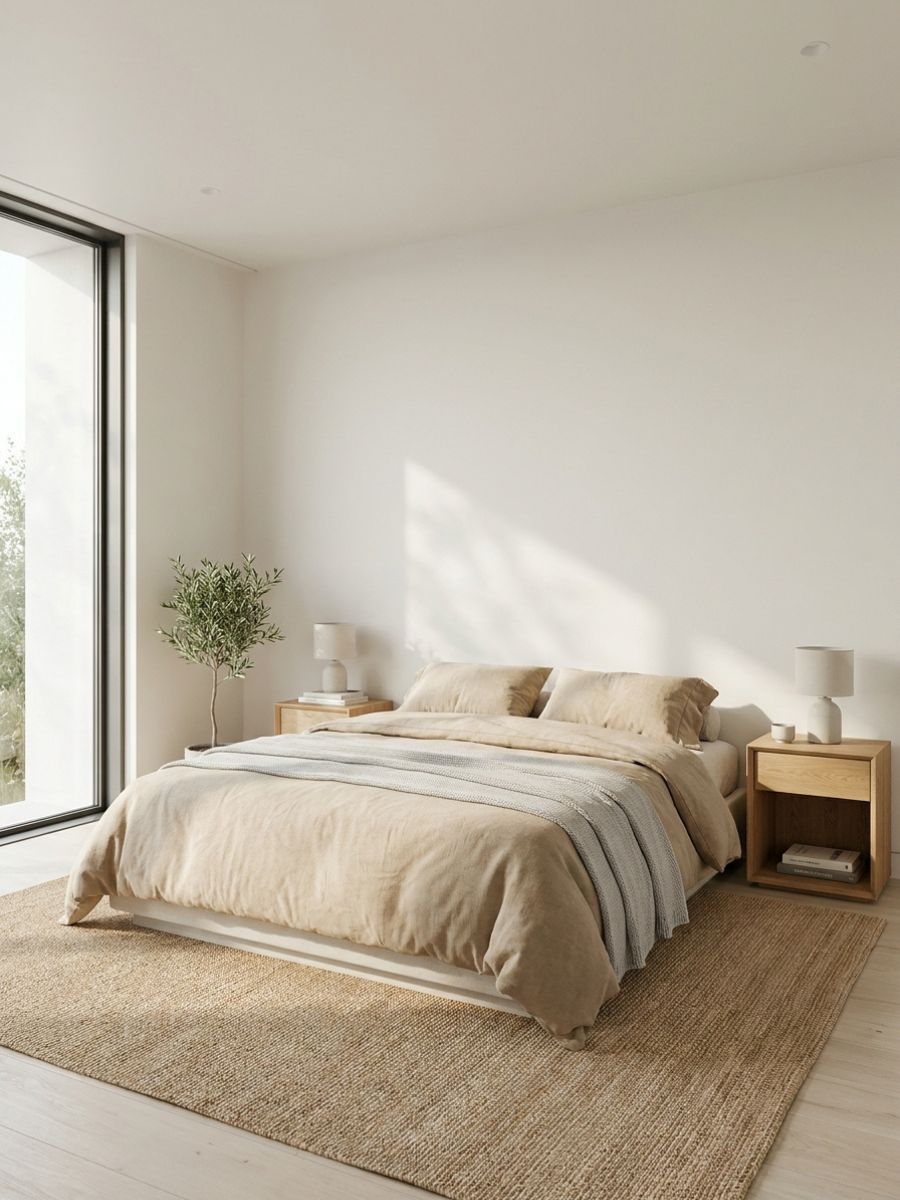
1. Embrace Neutral Tones
The foundation of any minimalist bedroom design starts with color. Soft whites, warm beiges, and light grays work together to create a naturally serene atmosphere that encourages rest. These shades also reflect natural light beautifully, making even a small bedroom feel more spacious and open.
The key is to layer different tones within the same neutral family rather than relying on a single flat color. Try an off-white wall with a linen-beige duvet and a warm gray throw - the subtle variation adds depth without adding visual noise.
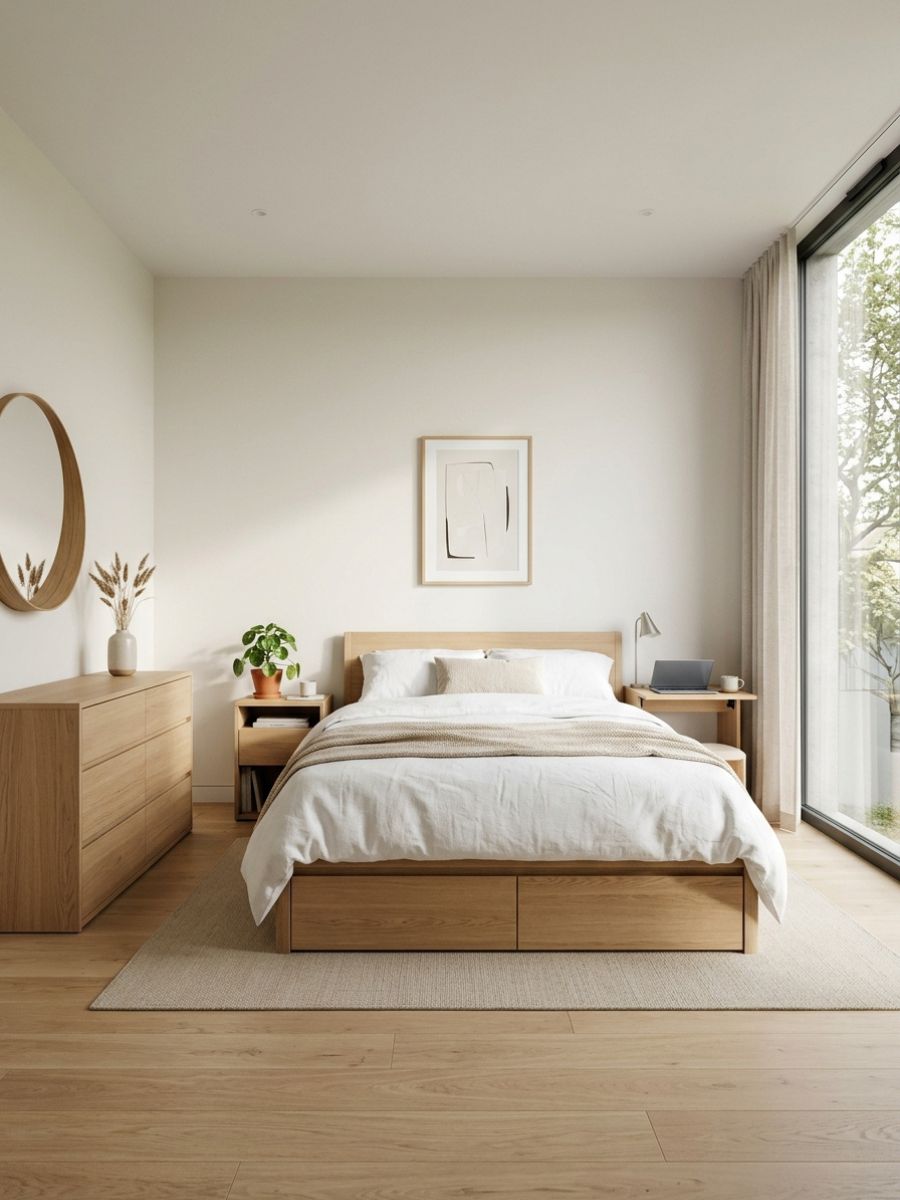
2. Opt for Functional Furniture
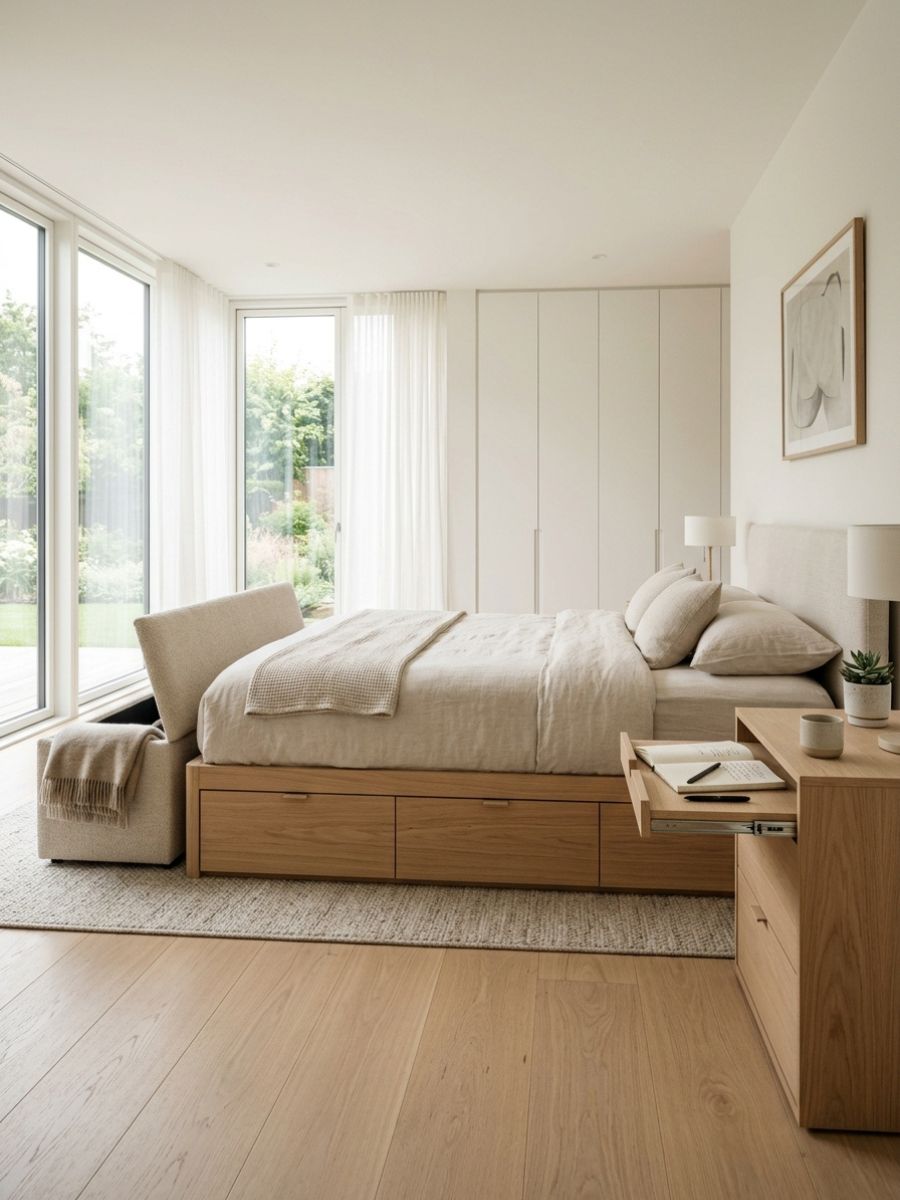
Functional furniture is a cornerstone of minimalist bedroom decor. Every piece should earn its spot by serving a clear purpose. A platform bed with built-in drawers, a nightstand that doubles as a small desk, or a streamlined dresser with clean lines - these choices maximize utility without crowding the room.
When shopping, prioritize pieces with simple silhouettes and hidden storage. The less visual weight a piece carries, the more the room breathes.
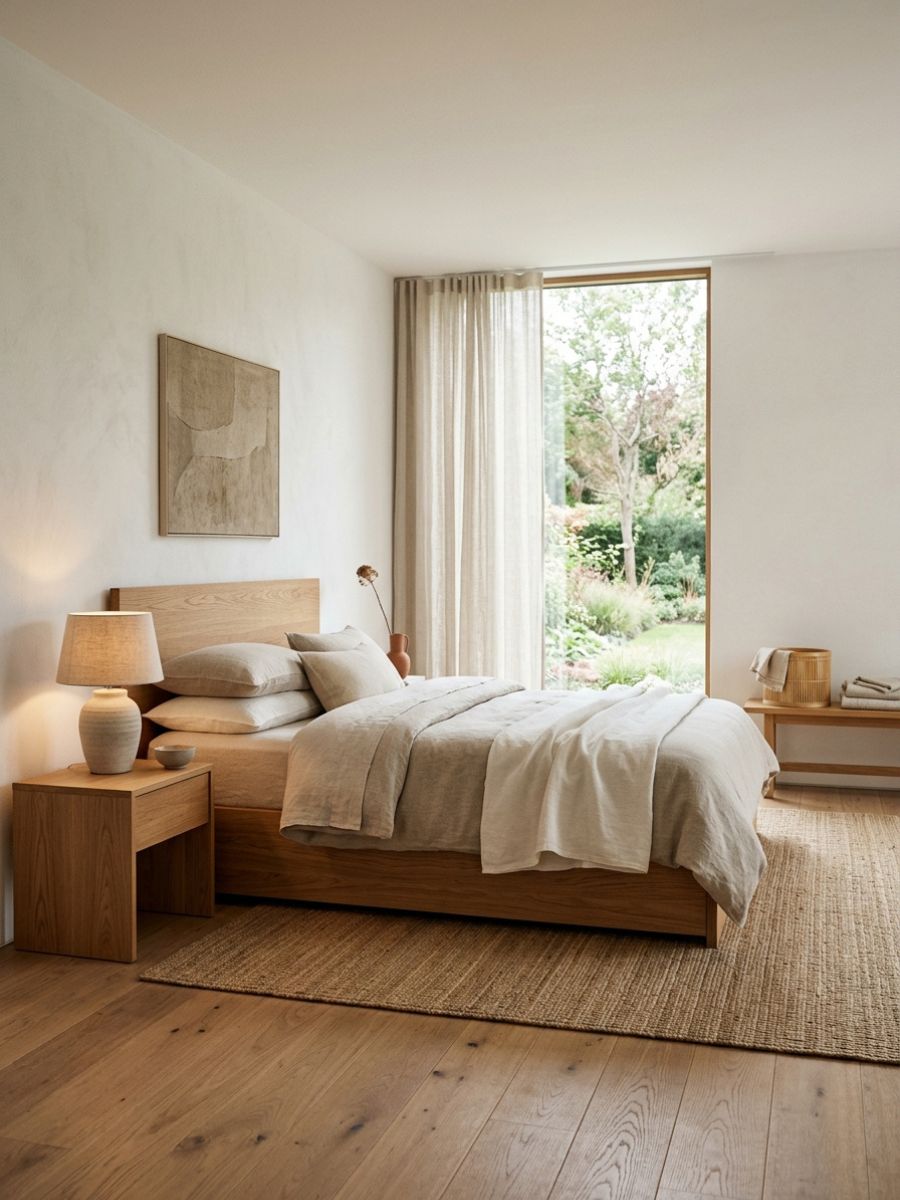
3. Incorporate Natural Materials
Natural materials bring warmth and texture into a minimalist bedroom without adding clutter. They also ground the space with an organic, earthy quality that synthetic materials simply cannot replicate. The best options to consider include:
- Wood: Wooden furniture or accent pieces add warmth and a timeless feel.
- Bamboo: Bamboo textiles and accessories offer a sustainable, lightweight touch.
- Stone: A small stone decor piece or ceramic lamp base adds an earthy, grounded vibe.
- Linen: Linen bedding and curtains layer in softness while staying breathable.
Keep material choices consistent - mixing too many different naturals can feel cluttered. Pick two or three and repeat them throughout the room.
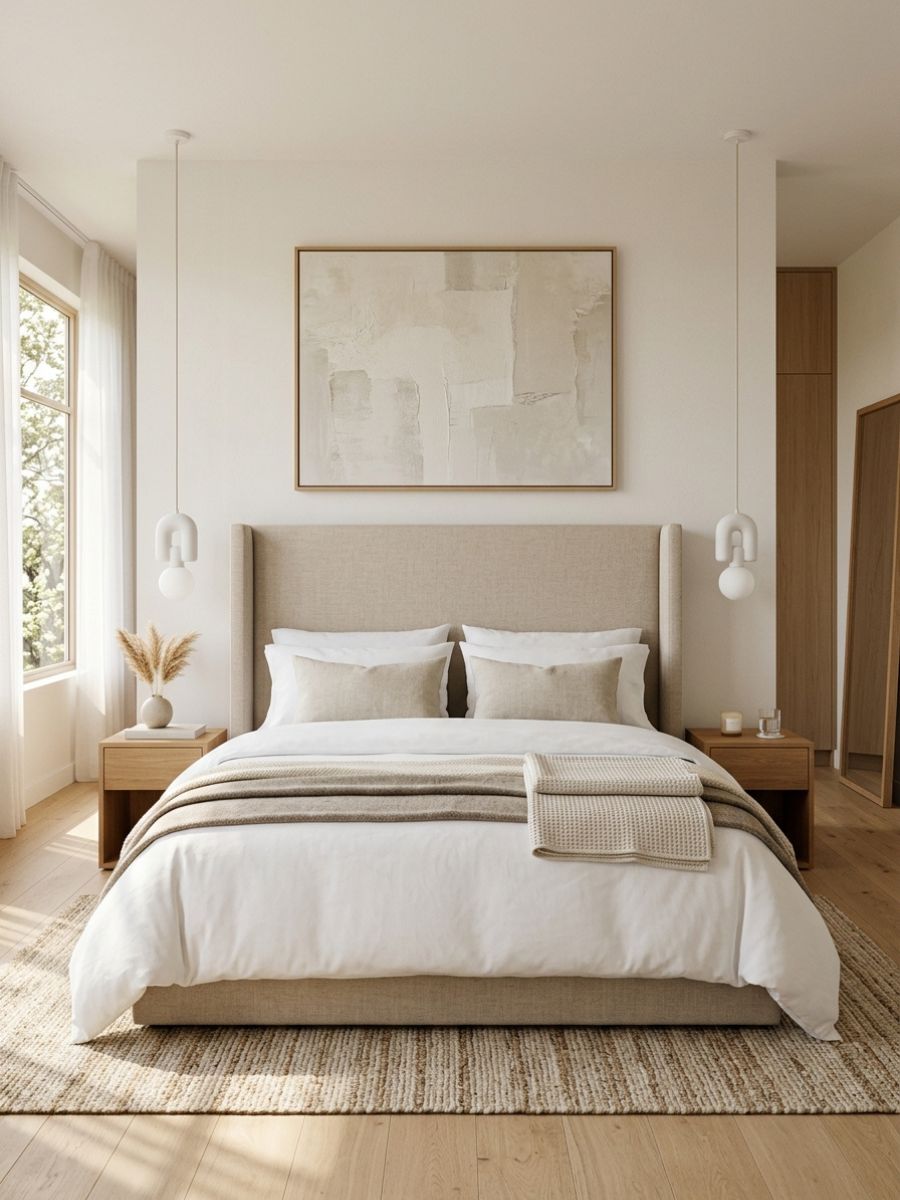
4. Create a Focal Point
A minimalist bedroom does not mean a boring bedroom. Every well-designed room needs one element that draws the eye - a single point of visual interest that anchors the whole space. This could be a bold upholstered headboard, a large piece of simple wall art, or a sculptural pendant light above the bed.
The key is that this focal point should stand out while still complementing the overall palette. It adds personality and intention to the room without overwhelming the clean aesthetic you have worked to create.
5. Utilize Under-Bed Storage
One of the smartest moves in minimalist bedroom design is making the most of the space under your bed. Keeping storage hidden keeps surfaces clear, which is essential for that clean, uncluttered look. Practical under-bed storage options include:
- Flat storage bins for seasonal clothing
- Vacuum-sealed bags for extra duvets and pillows
- Rolling drawer units for shoes or accessories
6. Keep Decor Minimal
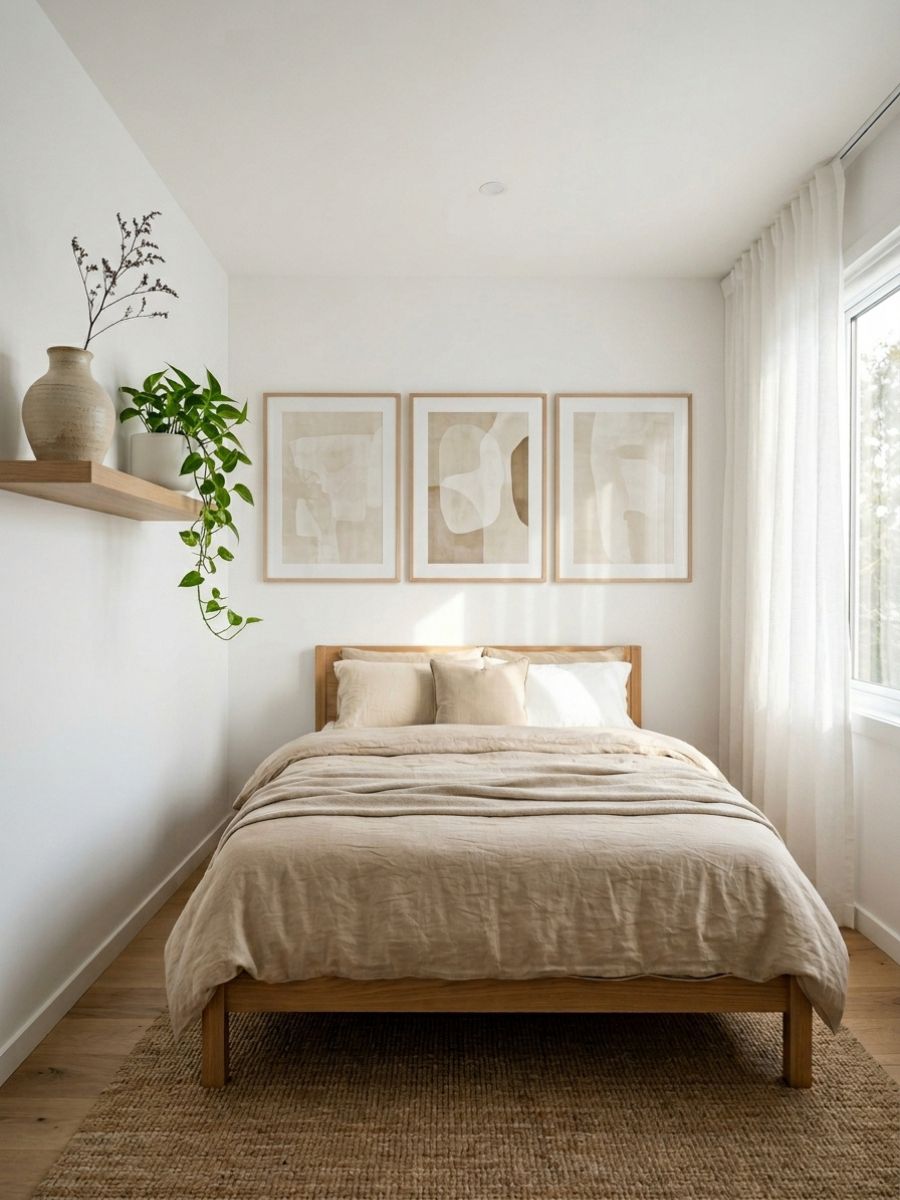
In a minimalist bedroom, every decorative item should feel intentional. Rather than filling shelves or surfaces with multiple small objects, choose one or two meaningful pieces that resonate with you - a single framed print, a ceramic vase, or a trailing plant in a simple pot.
Less is genuinely more here. A room with three carefully chosen decor pieces always looks more elevated than a room with twenty average ones. Edit ruthlessly, and let your few chosen items shine.
7. Choose Simple Bedding
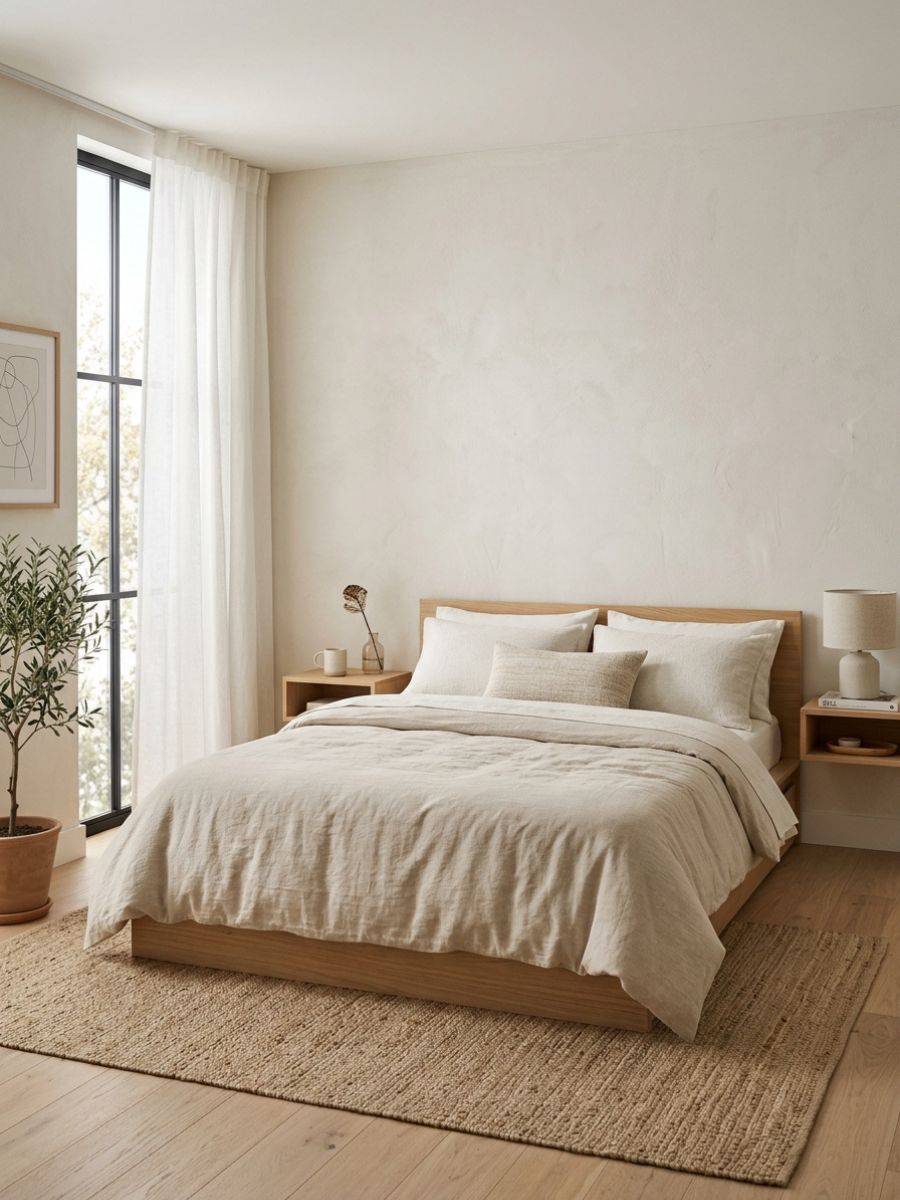
Your bedding is the visual centerpiece of your bedroom, so keeping it simple is one of the highest-impact minimalist upgrades you can make. Focus on a few key principles to get this right:
- Opt for solid colors or very subtle tone-on-tone patterns.
- Choose lightweight, breathable fabrics like cotton or linen for a relaxed, lived-in look.
- Limit decorative cushions to one or two - just enough to add texture without piling up.
8. Maximize Natural Light
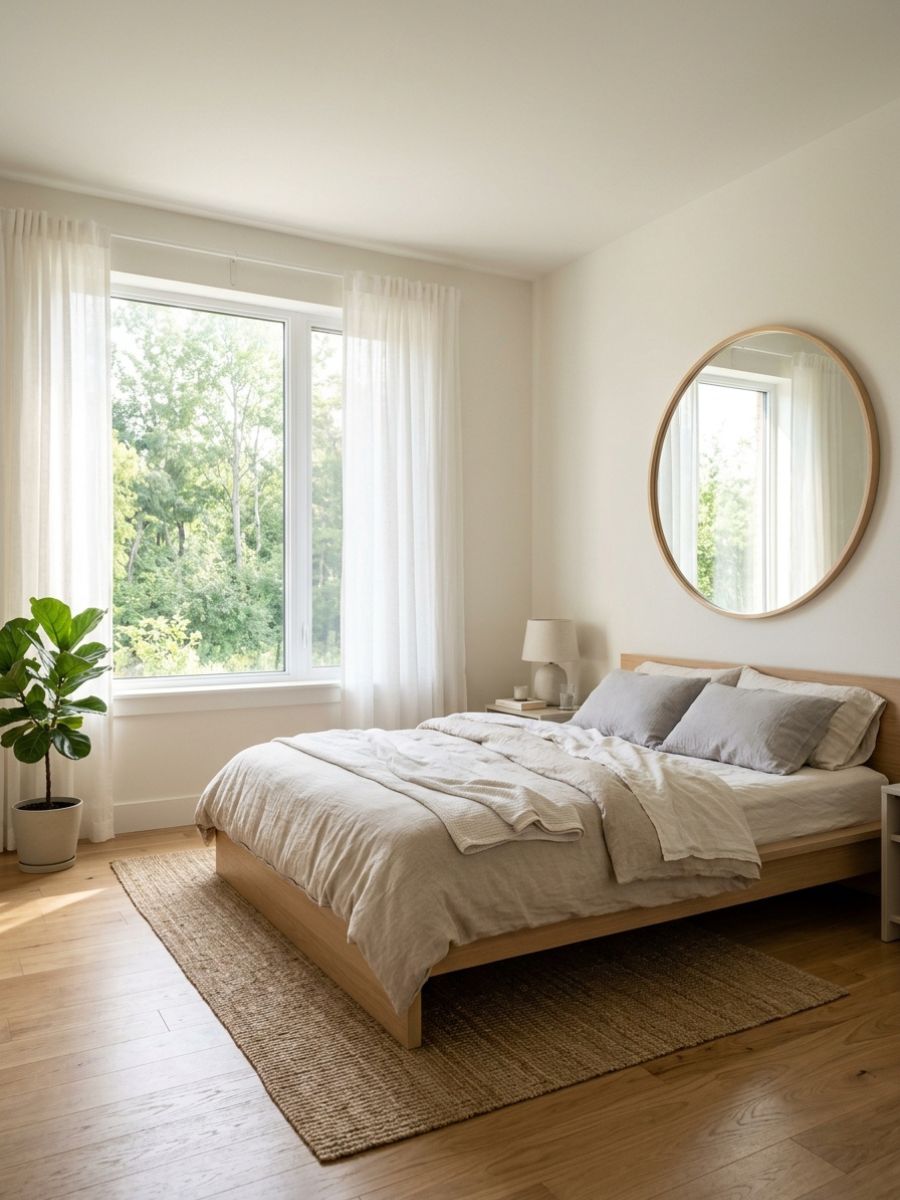
Natural light is one of the most powerful and cost-free tools in minimalist bedroom design. It makes spaces feel larger, healthier, and more uplifting. To make the most of it, opt for sheer curtains or simple roller blinds that let light through without blocking it.
Position a mirror on a wall perpendicular to the window to bounce light deeper into the room. Keep windowsills completely clear, and choose light-colored walls that reflect rather than absorb the brightness.
9. Add Greenery Sparingly
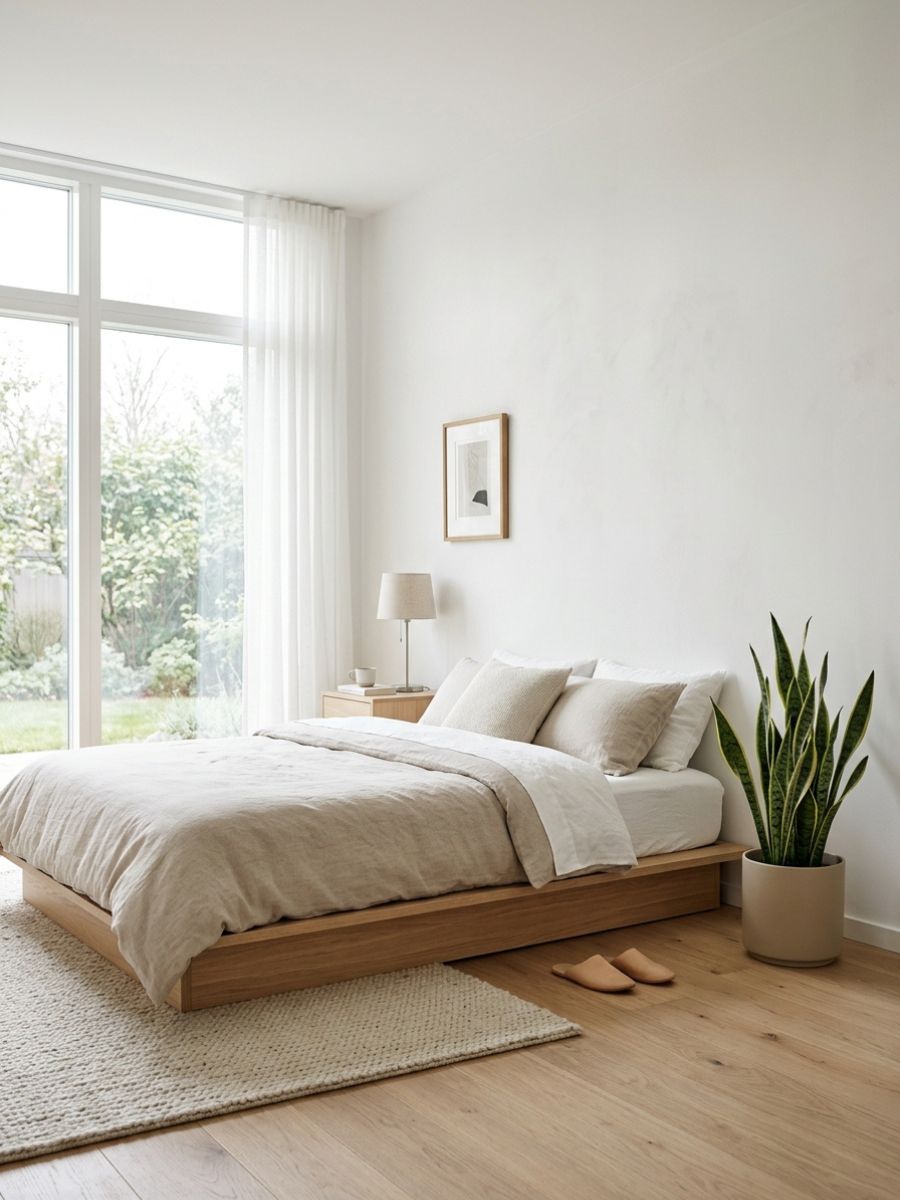
A touch of greenery can bring life into a minimalist bedroom without breaking the clean aesthetic - as long as you keep it intentional. The approach here is to choose wisely and resist the urge to fill every corner with plants. Stick to one or two well-placed choices:
- Low-maintenance plants like succulents, snake plants, or pothos work perfectly.
- Choose stylish, simple pots in neutral tones that blend with your decor.
- Position your plant where it gets the light it needs, not just where it looks good.
10. Use Multi-Functional Pieces
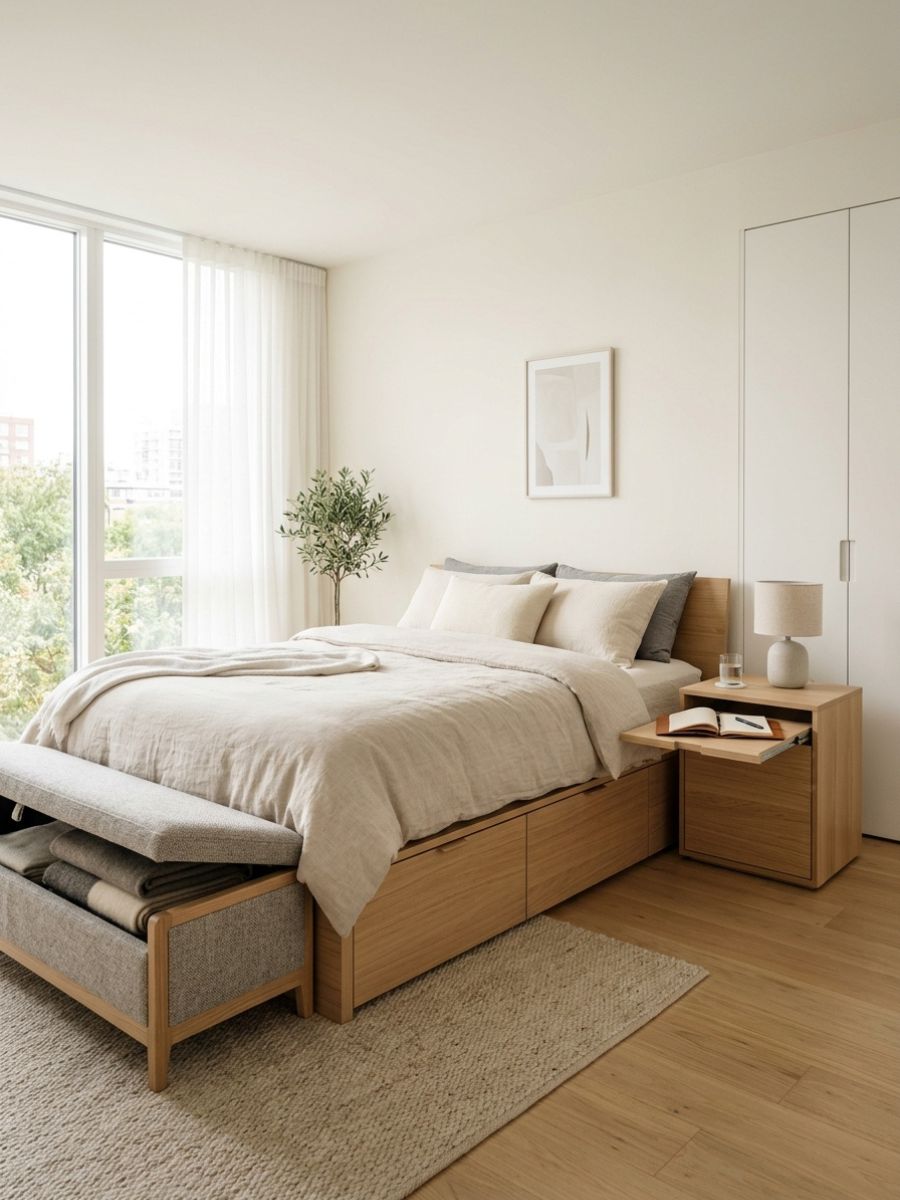
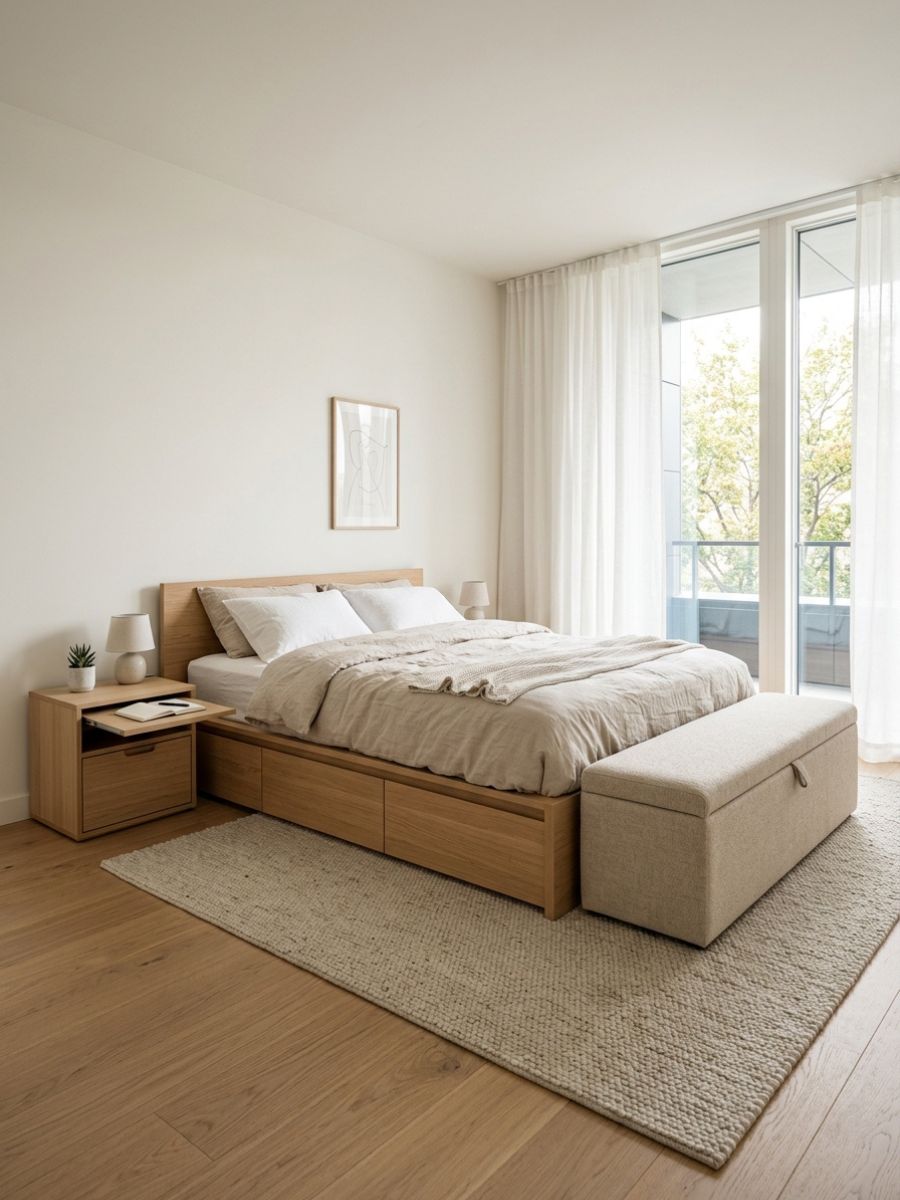
Every square foot counts in a minimalist bedroom, and multi-functional furniture is how you make the most of it. A bed with built-in storage eliminates the need for a separate chest of drawers. A nightstand with a pull-out shelf doubles as a workspace for reading or journaling. A bench at the foot of the bed stores blankets and offers a seating spot.
Furniture that does double duty keeps your room lean, functional, and beautifully uncluttered - the hallmark of great minimalist design.
11. Incorporate Soft Textures
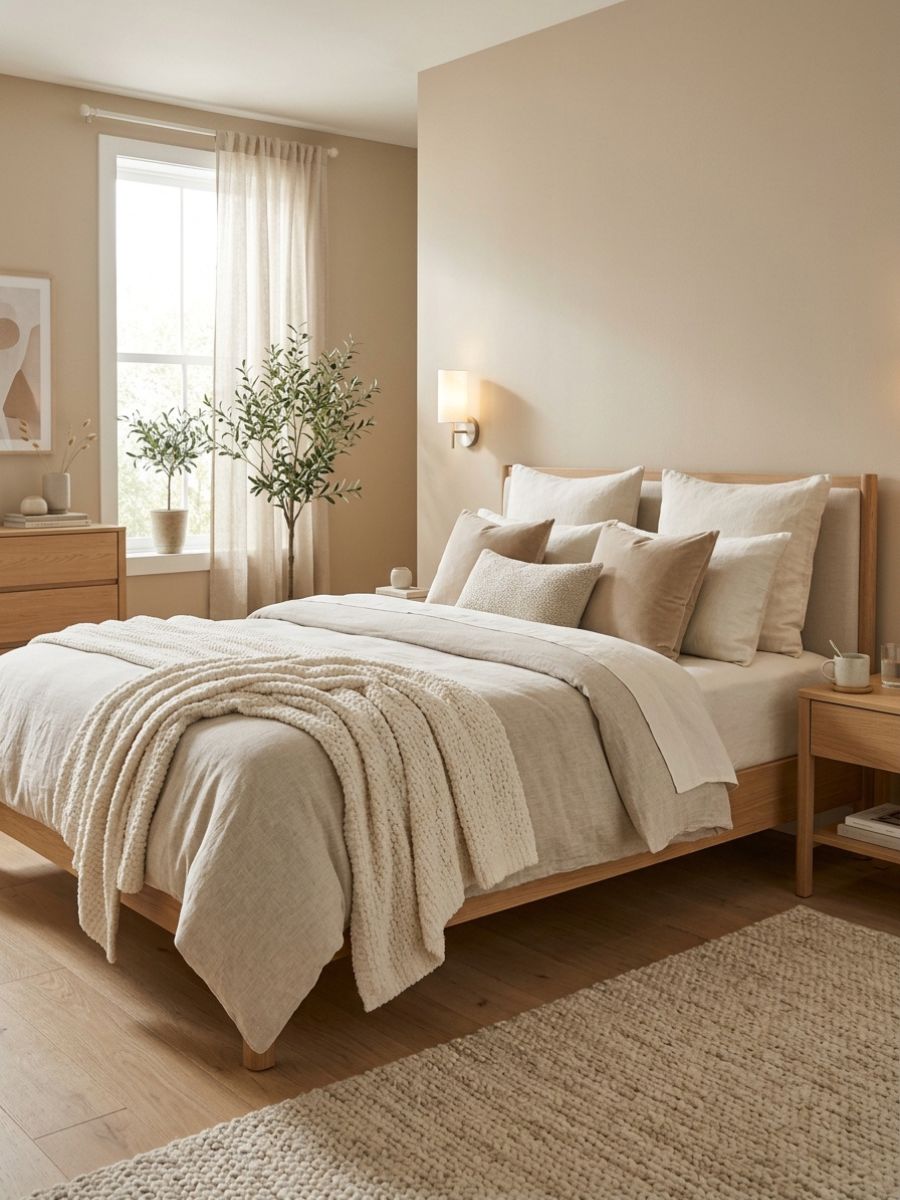
One of the common misconceptions about minimalist bedrooms is that they feel cold or stark. The solution is texture. Soft, tactile elements add warmth and comfort without adding visual clutter. Consider layering in:
- A plush throw blanket draped casually over the end of the bed
- A soft, woven rug underfoot beside the bed
- Velvet or linen cushions in tonal shades
The key is to keep the color palette consistent - texture brings warmth, while color restraint keeps the room calm.
12. Limit Wall Art
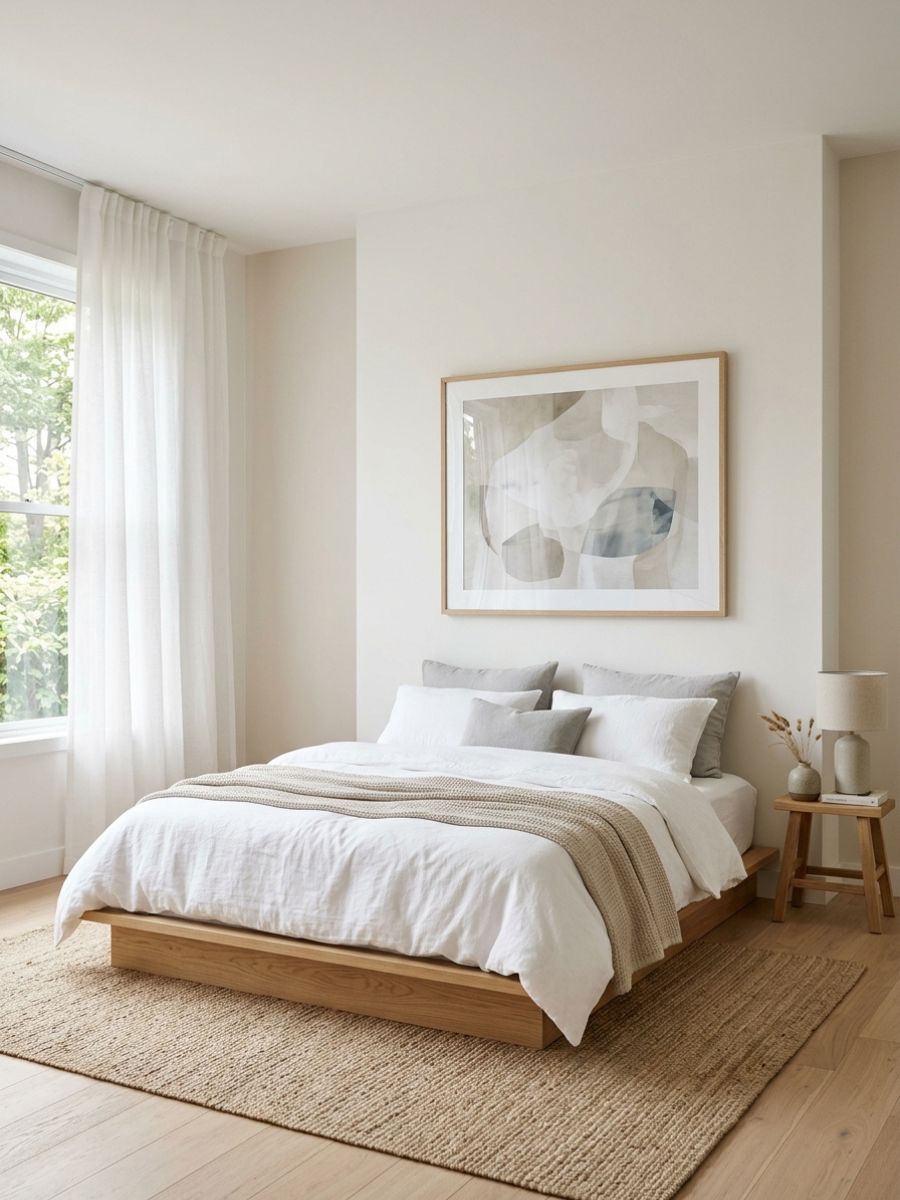
In a minimalist bedroom, your walls should breathe. Instead of filling them with multiple prints or a gallery wall, select one or two impactful pieces that genuinely resonate with you. A single large-format print above the bed, or one small framed piece on a side wall, creates a focal point without visual noise.
Choose artwork with subtle colors, clean lines, or simple abstract forms that reinforce your calm, uncluttered aesthetic. The negative space around it is just as important as the art itself.
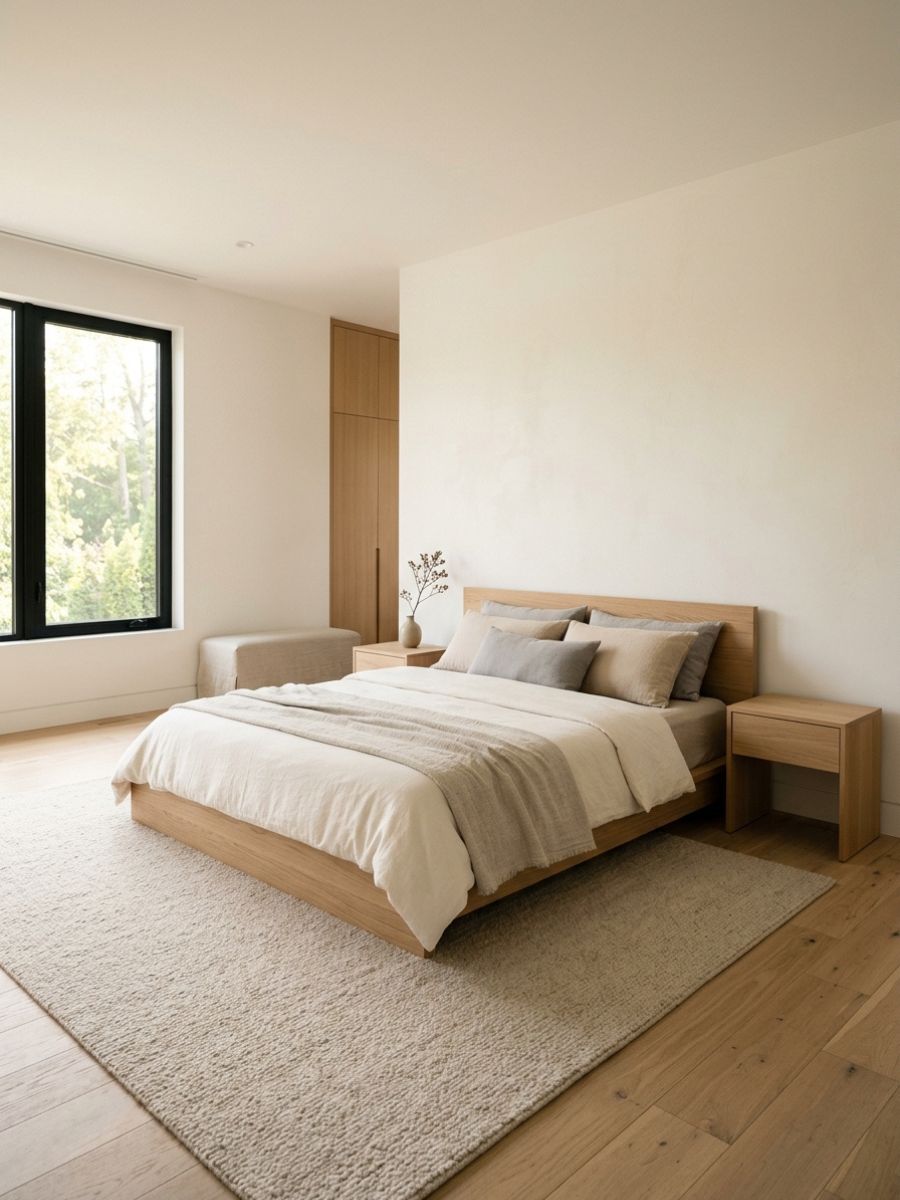
13. Keep Technology Out of Sight
Gadgets and cables are among the quickest ways to undermine a minimalist bedroom aesthetic. Keeping technology hidden is essential for maintaining a truly serene environment. Three practical ways to achieve this:
- Use a closed nightstand drawer or small box to conceal your phone and devices overnight.
- Opt for a wireless charging pad in a neutral color that blends with your surfaces.
- Use cable management clips or a cord box to keep wires completely out of sight.
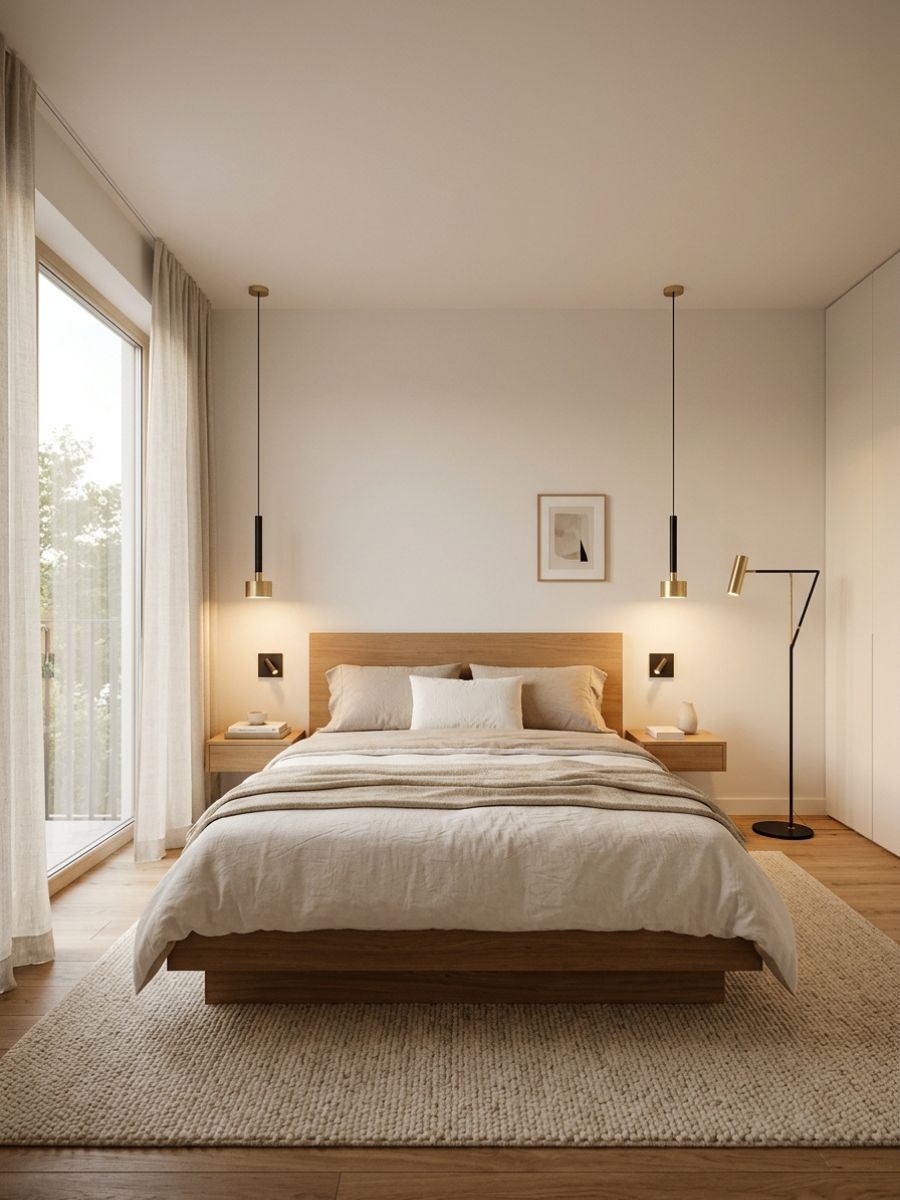
14. Select Sleek Lighting Fixtures
Lighting is one of the most underrated elements of minimalist bedroom design. The right fixture does two jobs at once: it provides functional illumination and serves as a quiet design statement. Look for pendant lights, simple wall sconces, or modern floor lamps with clean geometric silhouettes.
Choose fixtures in neutral finishes - matte black, brushed brass, or warm white - and keep bulb tones warm (2700-3000K) for a cozy, relaxing glow. Avoid overly decorative or ornate designs that pull attention away from the overall calm of the room.
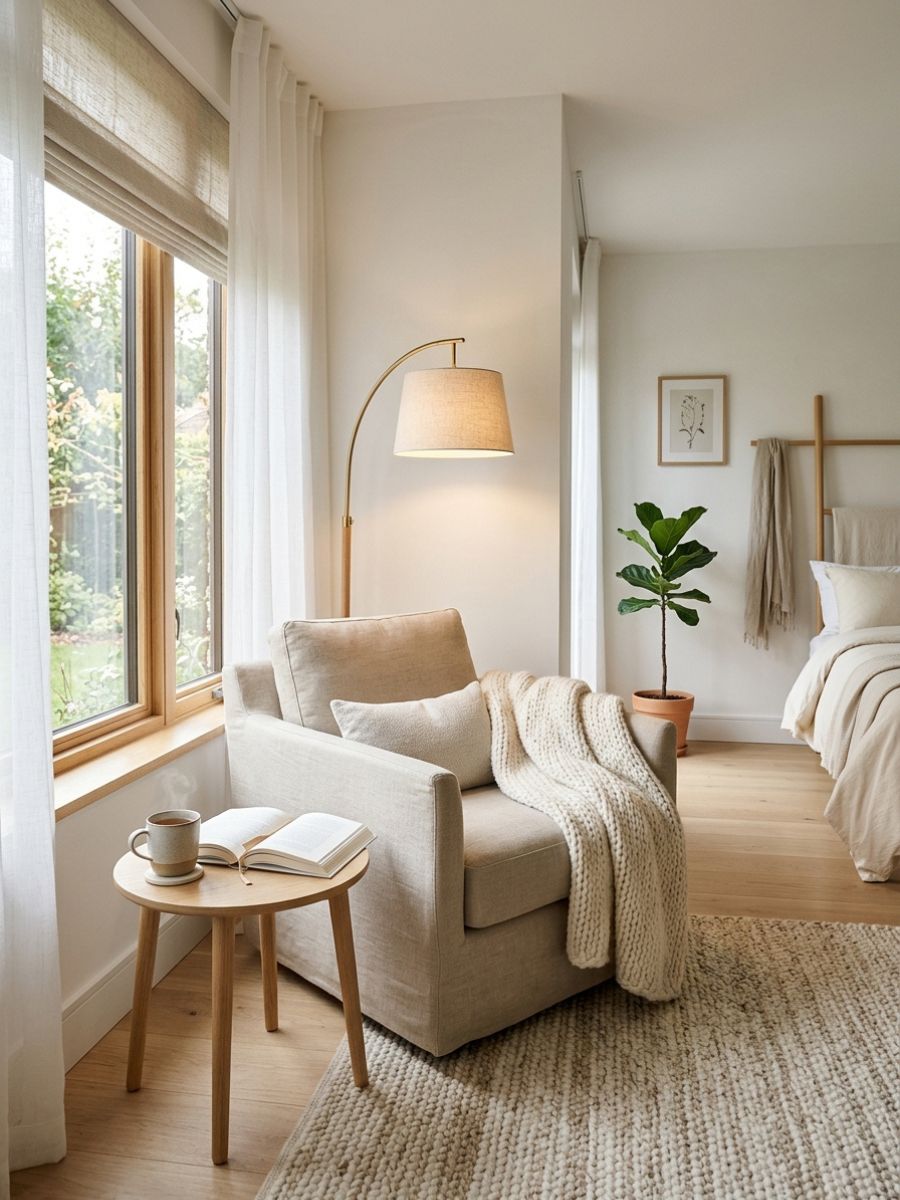
15. Create a Cozy Reading Nook
A reading nook adds a personal, inviting touch to your minimalist bedroom without overwhelming the space. The secret is keeping it compact and purposeful. Three key elements make a great minimalist reading nook:
- A comfortable armchair or oversized floor cushion in a neutral fabric that matches your palette.
- A small side table just large enough for a book and a cup of tea.
- Warm, directional lighting - a simple arc floor lamp or wall-mounted reading light works perfectly.
Tuck the nook into a corner or by a window to make it feel intentionally placed rather than squeezed in.
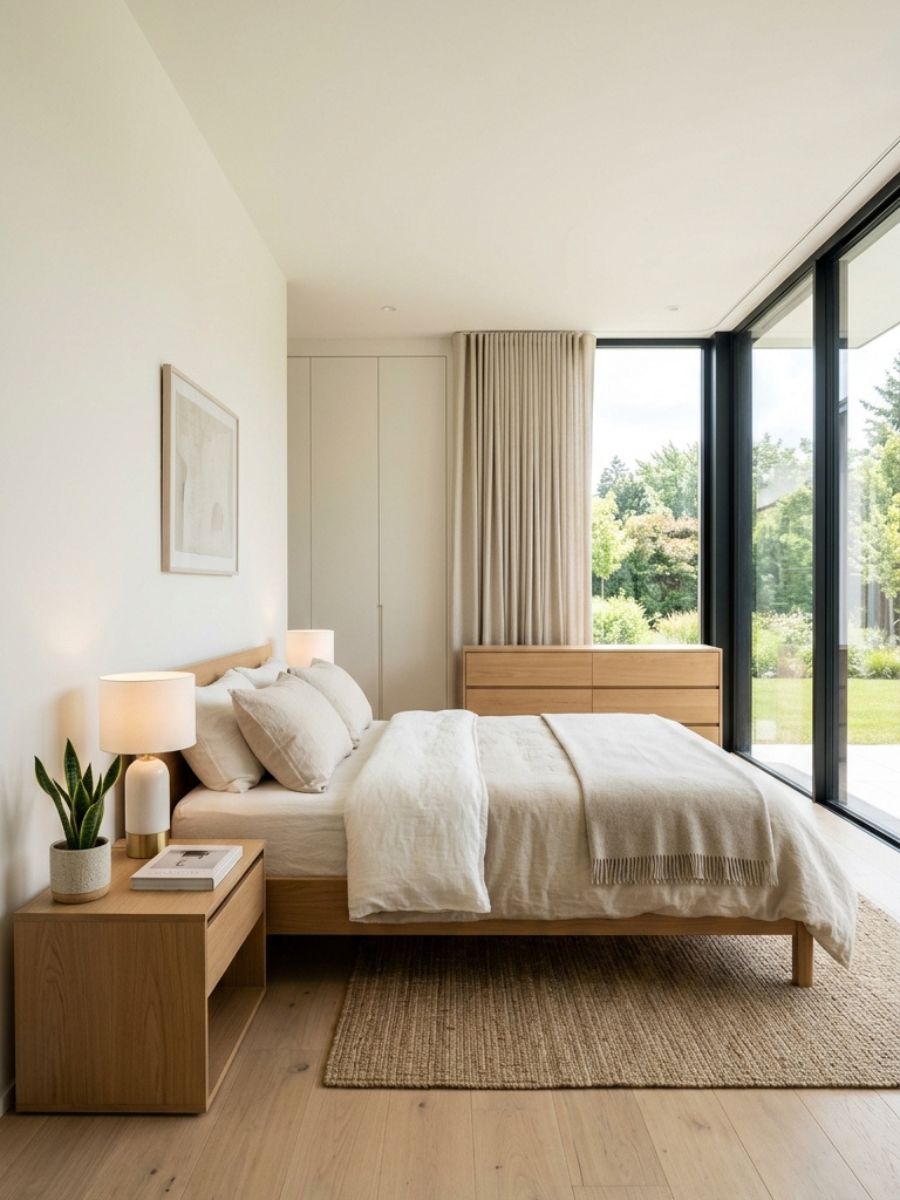
16. Maintain a Clutter-Free Surface
Clear surfaces are the single clearest visual signal of a truly minimalist bedroom. Nightstands, dressers, and shelves should be kept as bare as possible - holding only what you use daily. A lamp, a book, and a small plant is all a nightstand needs.
Use decorative trays or small boxes to corral any small essentials, and build a habit of doing a 60-second tidy before bed. Regular, small resets are far easier than deep clutter-clearing sessions.
17. Choose a Statement Rug
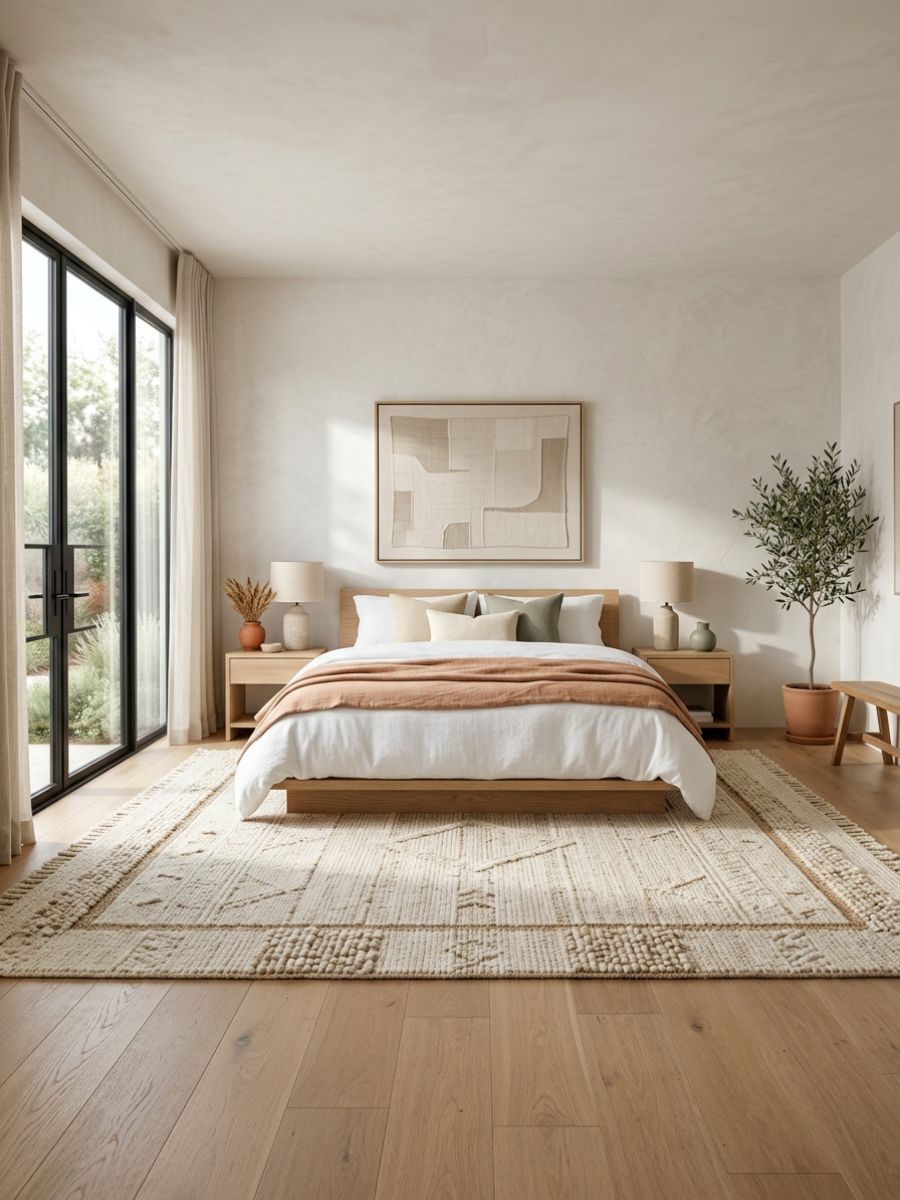
A well-chosen rug is one of the most effective ways to add personality and warmth to a minimalist bedroom without breaking the clean aesthetic. When selecting yours, consider three key qualities:
- Color: Choose a hue that complements your neutral palette - a warm ivory, dusty sage, or soft terracotta all work beautifully.
- Texture: A chunky weave or natural jute adds tactile warmth underfoot and visual interest at floor level.
- Pattern: A subtle geometric or abstract pattern can add visual intrigue without overwhelming the room.
18. Personalize With Purpose
Minimalism does not mean your bedroom should feel like a hotel room. The goal is a space that is uniquely, meaningfully yours - just without the excess. Choose a small number of items that carry real personal significance: a favorite framed photograph, a meaningful ceramic, a book you return to often.
The rule of thumb is simple: if an item does not bring you genuine calm or joy in this space, it does not belong here. Let your personality show through a few carefully chosen pieces rather than many average ones.
Final Thoughts
Creating a minimalist bedroom is not about emptying your room - it is about making every single element count. Start with the biggest impact changes: clear your surfaces, choose a neutral color palette, and swap out any furniture that serves no real purpose. From there, layer in natural textures, smart storage, and a single focal point that reflects your personality.
You do not need to overhaul everything at once. Pick two or three ideas from this list and start there. Even small, intentional changes add up quickly to a bedroom that genuinely feels calmer, cleaner, and more restorative - every single night.